 Argentina has a fascinating economy. It was once one of the richest countries on earth, and now, it’s not. The current GPD per capita is $26,500, putting it at 88th globally.
The country was caught flat-footed in the early 1900s when it lost its advantage exporting food to Europe. Rather than investing the surplus gained when things were good into education and economic development, the government emphasized military service and nationalism. And then, the government starting swinging between left-wing and right-wing politicians as people tried to figure out what might work, a process that continues to the present.
I was visiting Buenos Aires in November of 2025, and I saw:
- Exchange rates that fluctuated wildly from day to day.
- Stores that don’t list prices.
- ATMs that limit how much cash you can withdraw, to amounts of Argentine pesos under $100 USD per day and sometimes below $20 USD.
- Service providers who are happy to take USD in cash for payment.
- Cash exchange rates for USD that varied with what bills were presented. The best rate was for $100s.
- A lot of people working side hustles.
- Lots of candy kiosks. If they don’t have enough cash to give you change, they give you candy instead.
- Signs for ICBC, the Chinese bank. Not a lot of US banks seemed to have a presence.
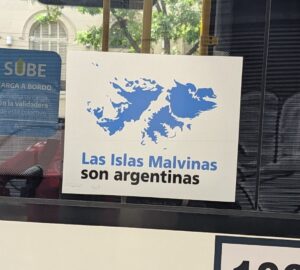
- Stickers on busses reminding everyone that Malvinas (the Falkland Islands) is really Argentine. With everything going on in the country, that’s the rallying cry? Note that in the last referendum held on Falklands sovereignity, the UK won, 1513 votes to 3. Not a typo.
There was a big cryptocurrency conference in town when we were there. Crypto actually makes some sense in a country where the default currency can’t be trusted to have value. Not like crypto can be trusted, either, but crypto at least gives people divesified untrustworthy holdings.
I also saw a soccer game, a beautiful bookstore, fascinating street art, and impressive historical sites. It was a great place to visit.
Cautionary tale? Yes. Great vacation? Also yes.